TL;DR — Installing solar on a Dubai home means working through DEWA's Shams Dubai programme: pick a DEWA-approved installer, get a Solar NOC and design approval, install on your rooftop, pass inspection, and get a bidirectional meter for net metering. Typical villa systems are 5–12 kW, commonly priced around AED 2–2.50/watt installed, with payback often in 4–8 years. Compare Dubai installer quotes
How do you install solar panels on a home in Dubai? You install through DEWA's Shams Dubai programme using a DEWA-approved contractor: they design the system, secure the Solar NOC and design approval, install it on your rooftop, and DEWA inspects and connects it with a bidirectional meter for net metering. For a typical villa the process takes a few weeks end to end.
Why Dubai is the UAE's best solar market
Dubai combines three things that make rooftop solar attractive: intense year-round sunlight, a clear and mature regulatory path (Shams Dubai), and net metering that credits your surplus. DEWA also publishes a list of approved contractors and maintains equipment-eligibility standards, which raises the baseline quality of installations.
Step-by-step: going solar in Dubai
1. Check your eligibility. You need to own the property (or have the owner's consent) and have suitable, unshaded roof space. North-facing roofs can still work with tilt frames.
2. Size your system. Most Dubai villas install between 5 kW and 12 kW. Your installer sizes it against your Total Connected Load and your actual consumption from past bills — oversizing wastes money, undersizing leaves savings on the table.
3. Choose a DEWA-approved installer. This is mandatory. Approved firms can file permits, use eligible equipment, and keep your connection and warranty valid.
4. Permits and approvals. Your contractor applies for the Solar NOC and design approval, submitting site plans, system drawings and equipment details to DEWA.
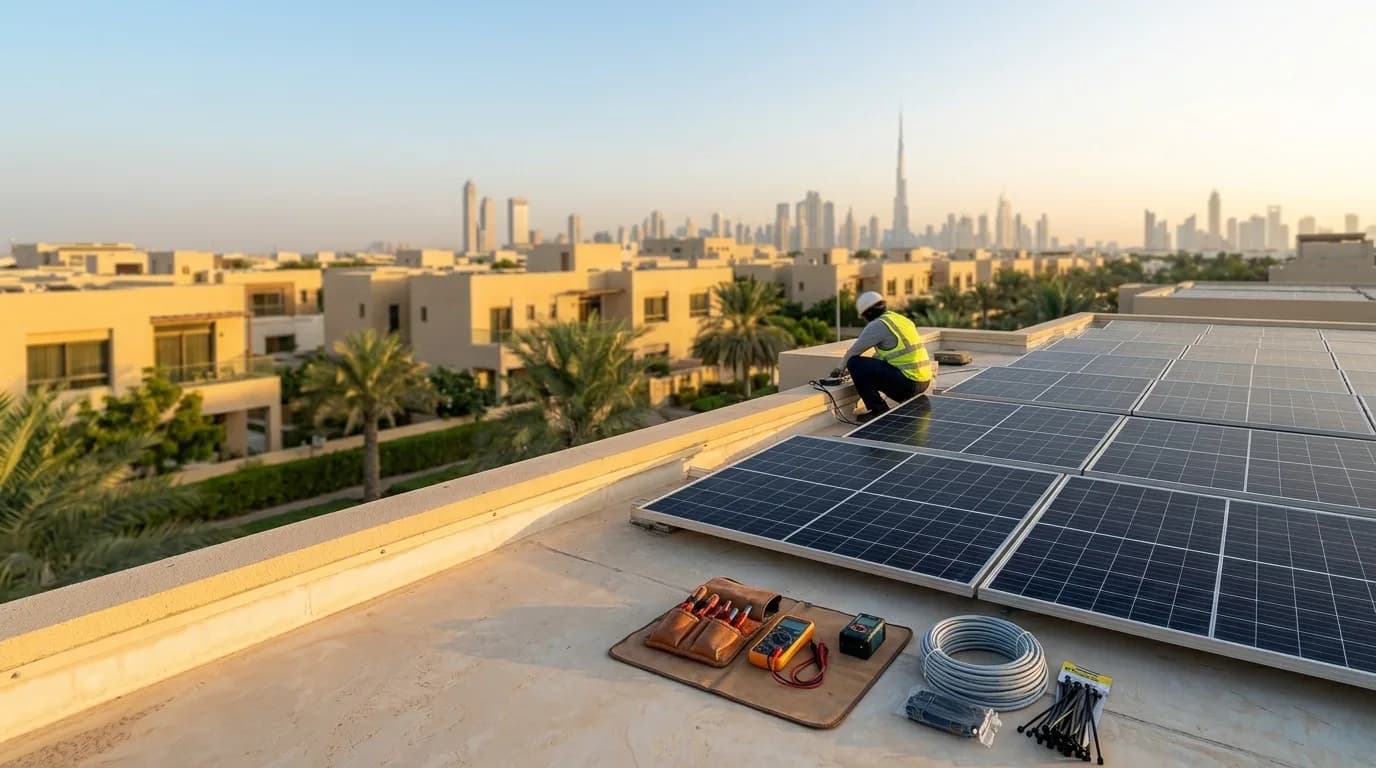
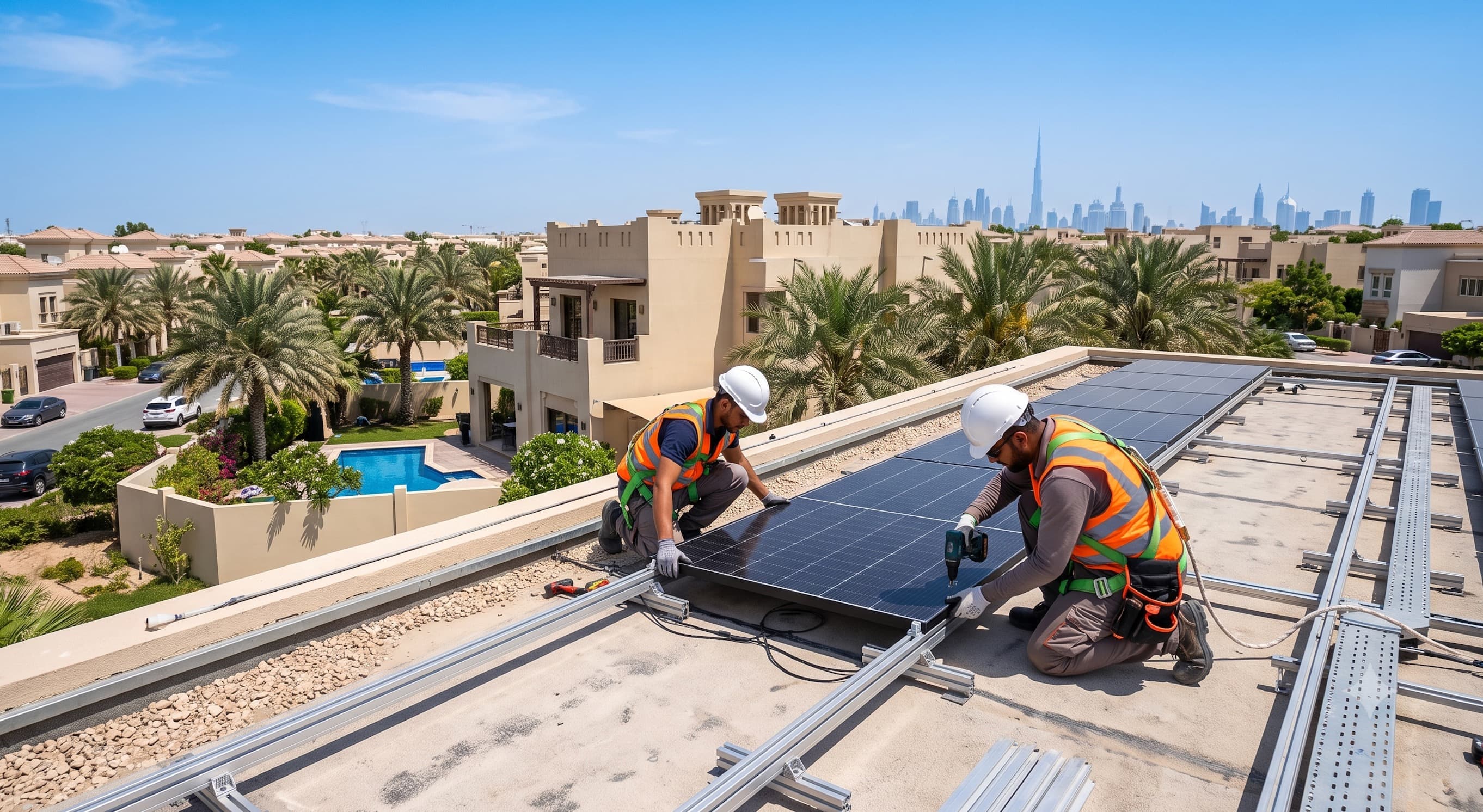
5. Installation. Residential installs commonly take a few days on-site once approved.
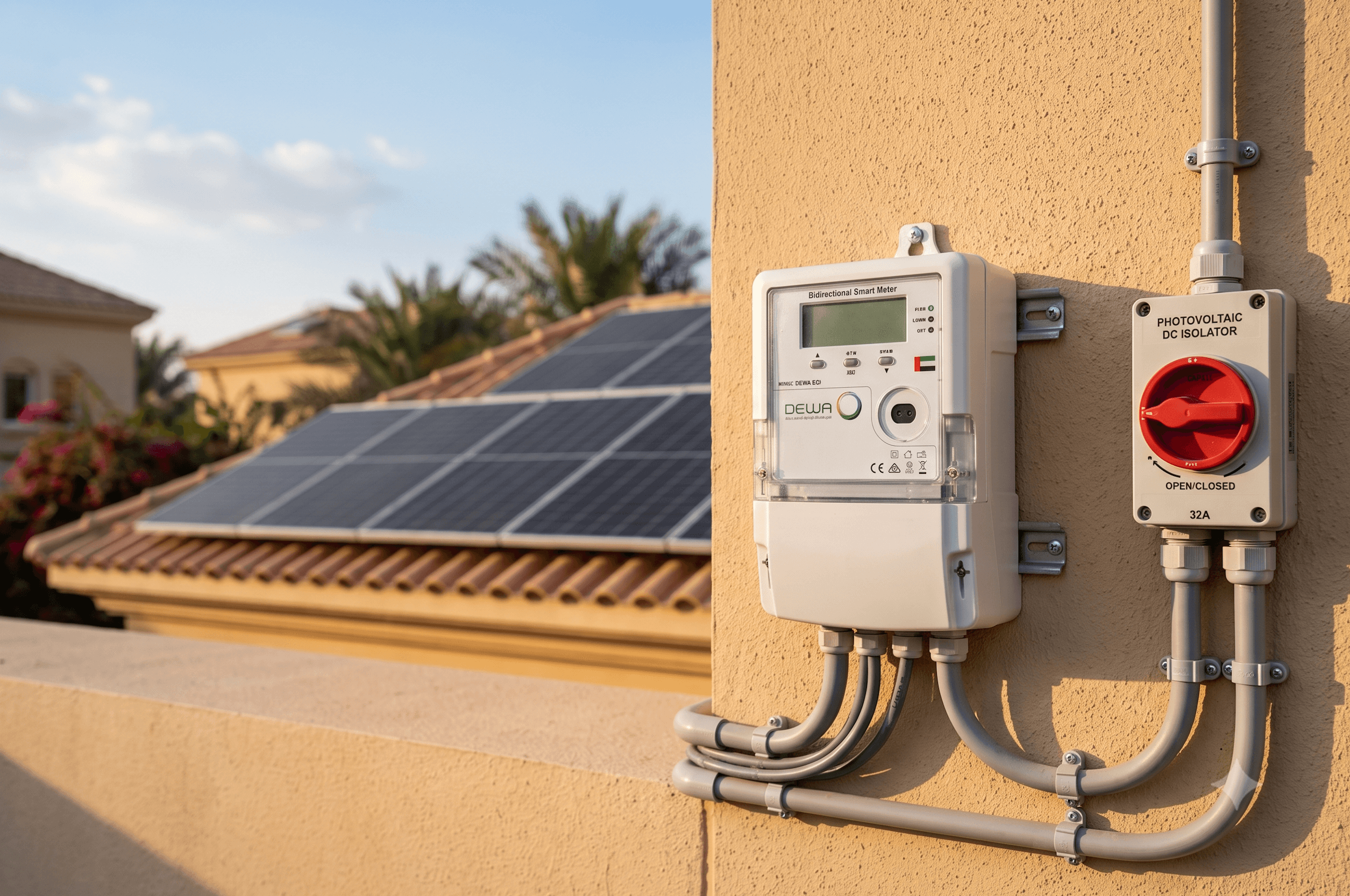
6. Inspection and connection. DEWA inspects for safety and compliance, installs the bidirectional meter, and energises the system.
7. Start saving. From go-live, your home runs on solar first, with surplus credited under net metering.
What it costs in Dubai
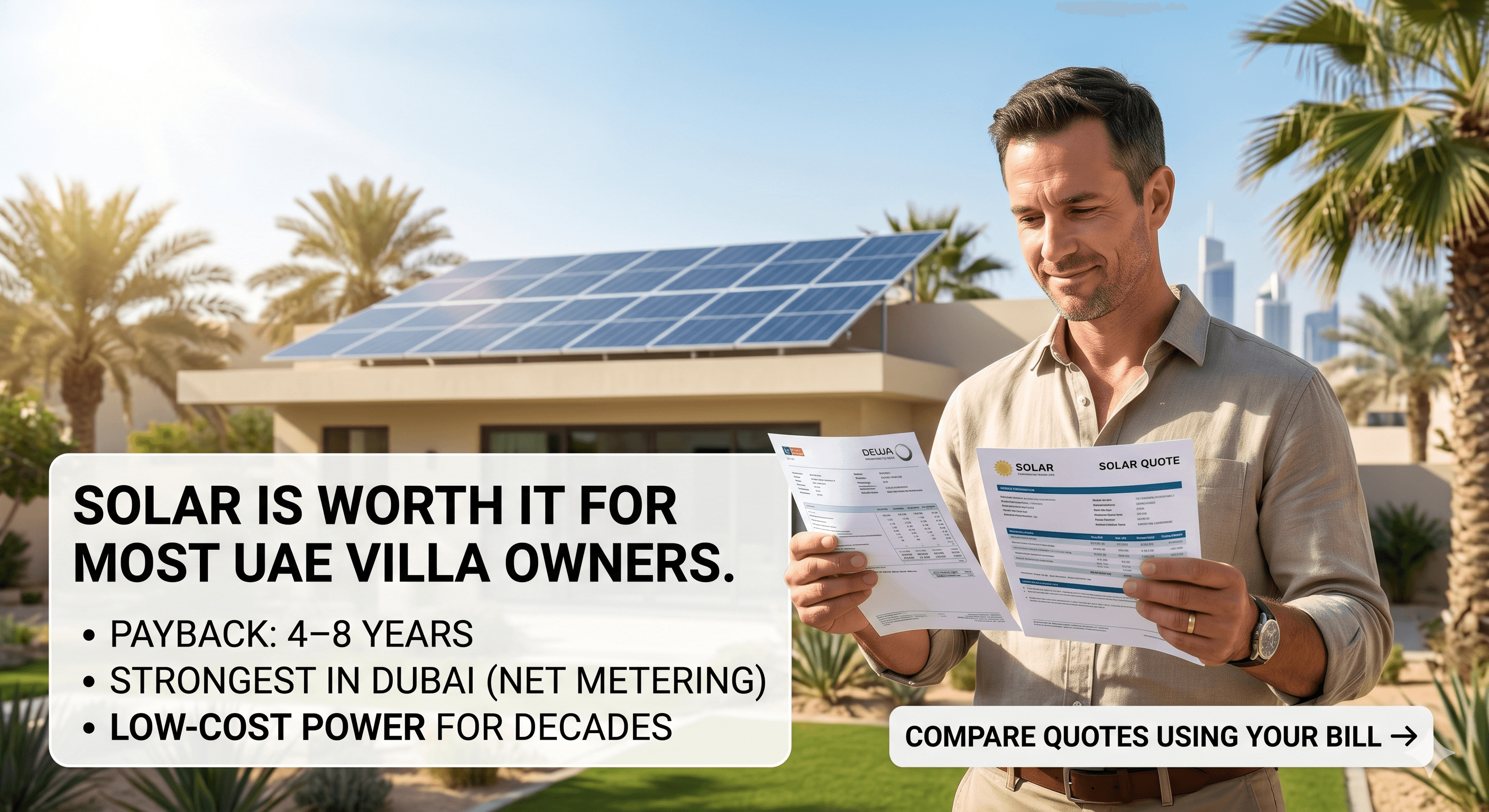
Published 2025–2026 data puts residential installation around AED 2–2.50 per watt, so a 5 kW system sits roughly in the AED 12,500–30,000 range and larger systems cost more. Add a one-off DEWA connection fee of AED 1,500 (mainly for the generation check-meter; reduced for small systems below 10 kWp). Payback is widely reported at around 4–8 years depending on consumption and system size.
These are reference ranges. Two installers can quote very different prices for the same roof depending on panel/inverter tier, whether a battery is included, and roof complexity.
Common Dubai-specific questions
Do I need a battery? Not for net metering — the grid acts as your "battery." A battery adds resilience and self-consumption but increases cost.
What about dust? Dubai's dust reduces output between cleans; budget for periodic cleaning.
Can I install on a flat roof? Yes — tilt-mounting orients panels correctly. Ground-mounting is not allowed under Shams Dubai.
Renting? You'll need the owner involved; the system is fixed to the building.
Your next step
The single biggest variable you control is who you hire and what you pay. Getting several DEWA-approved quotes for the same scope is the fastest way to a fair price and a quality install.