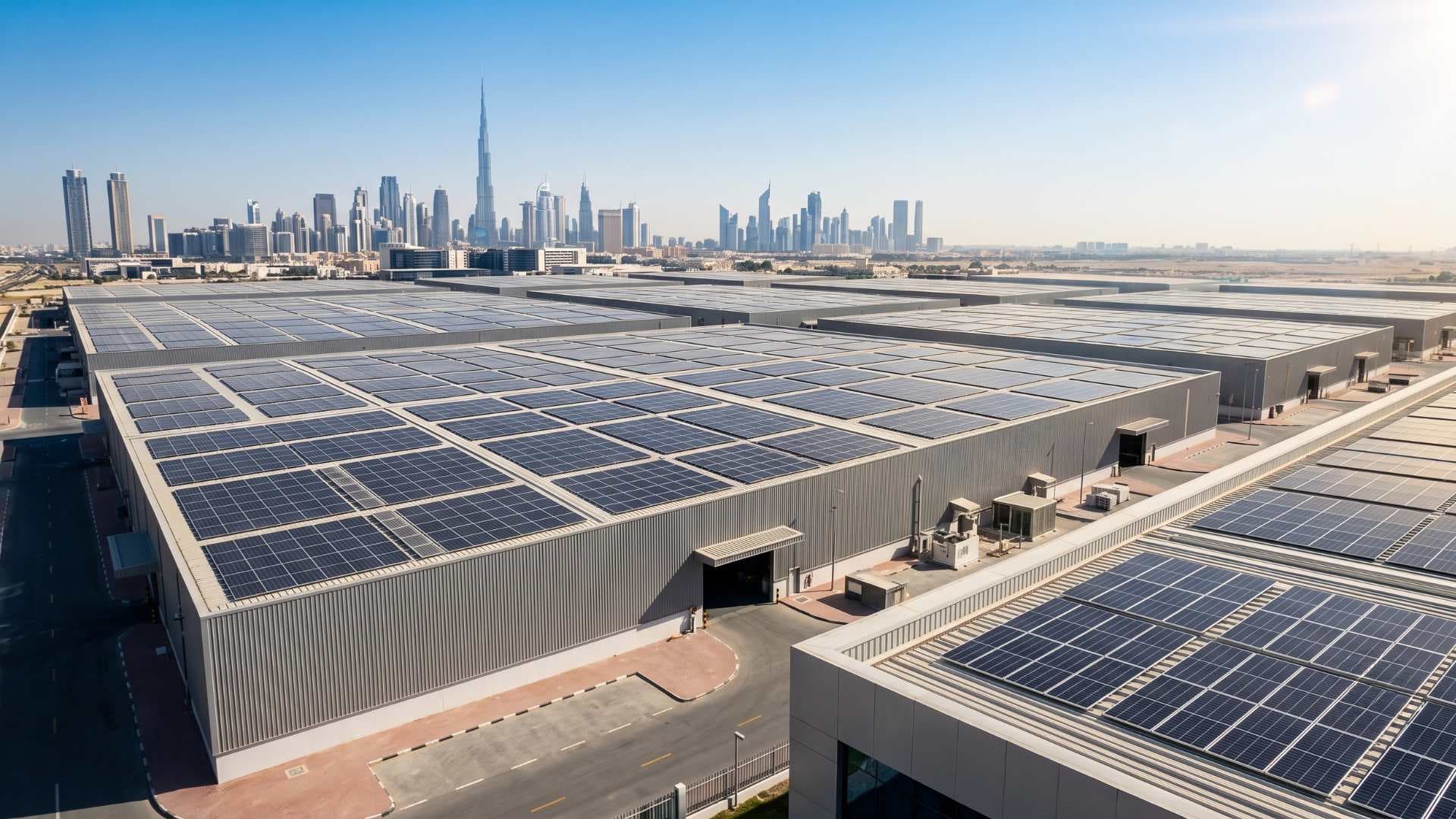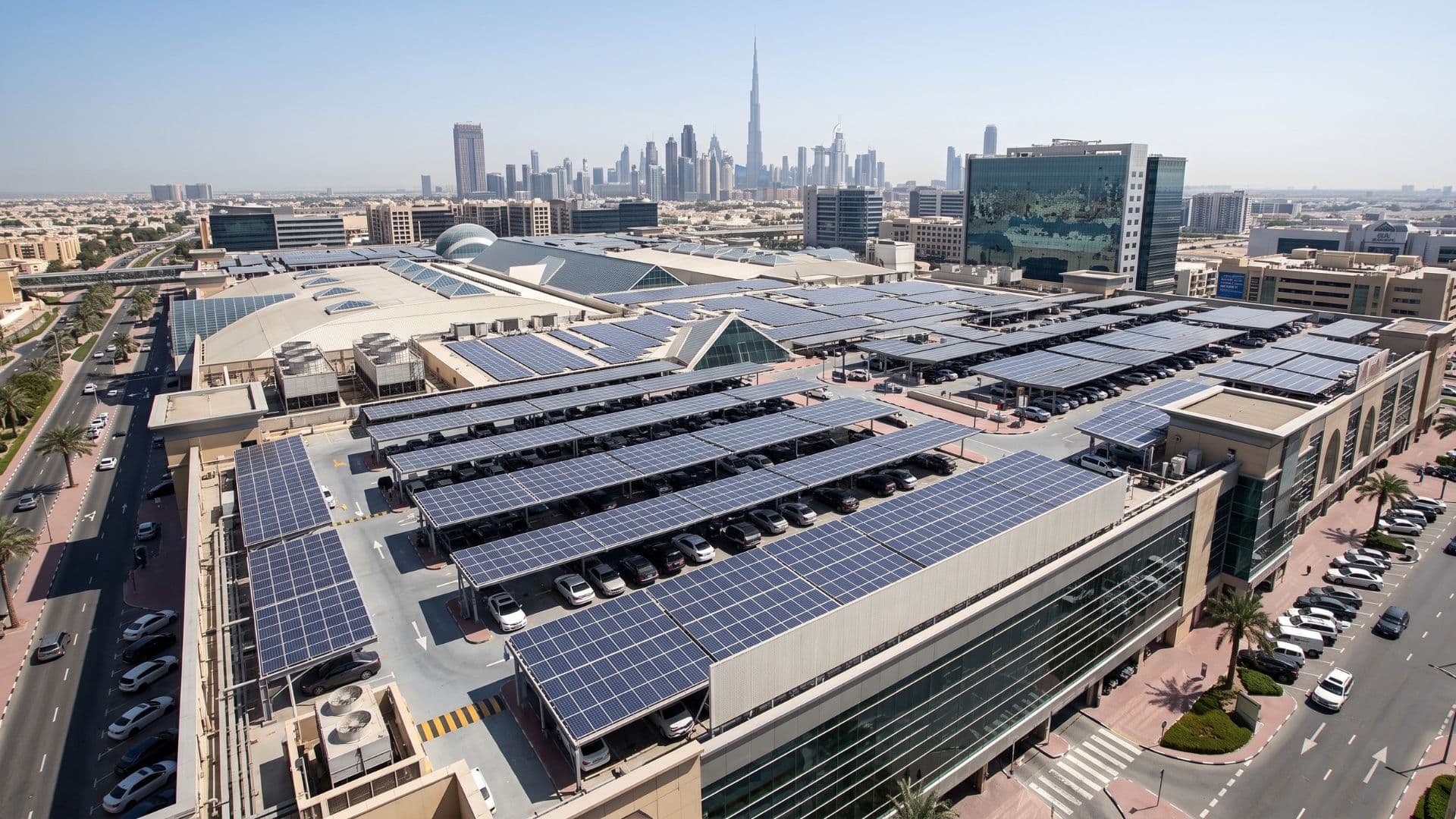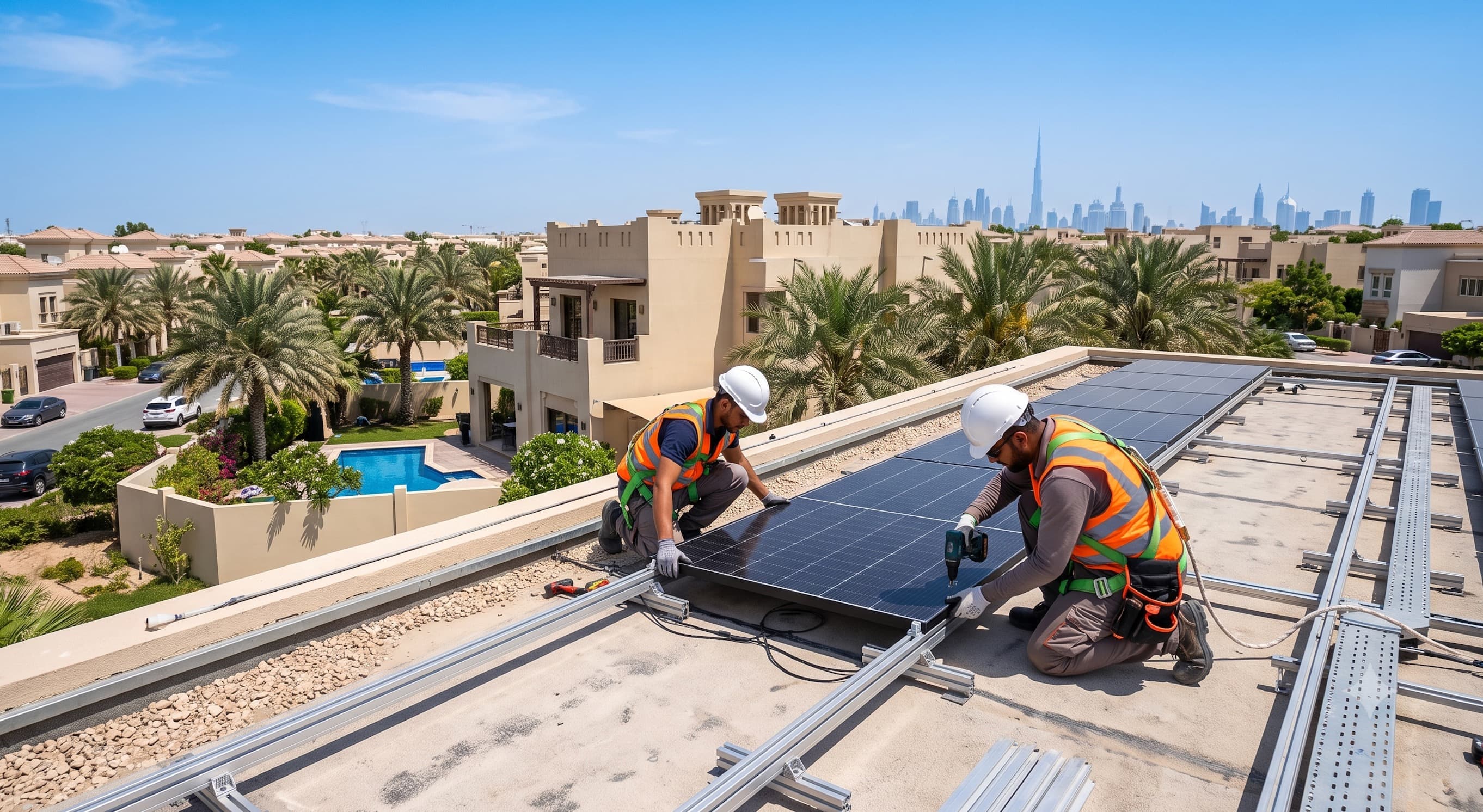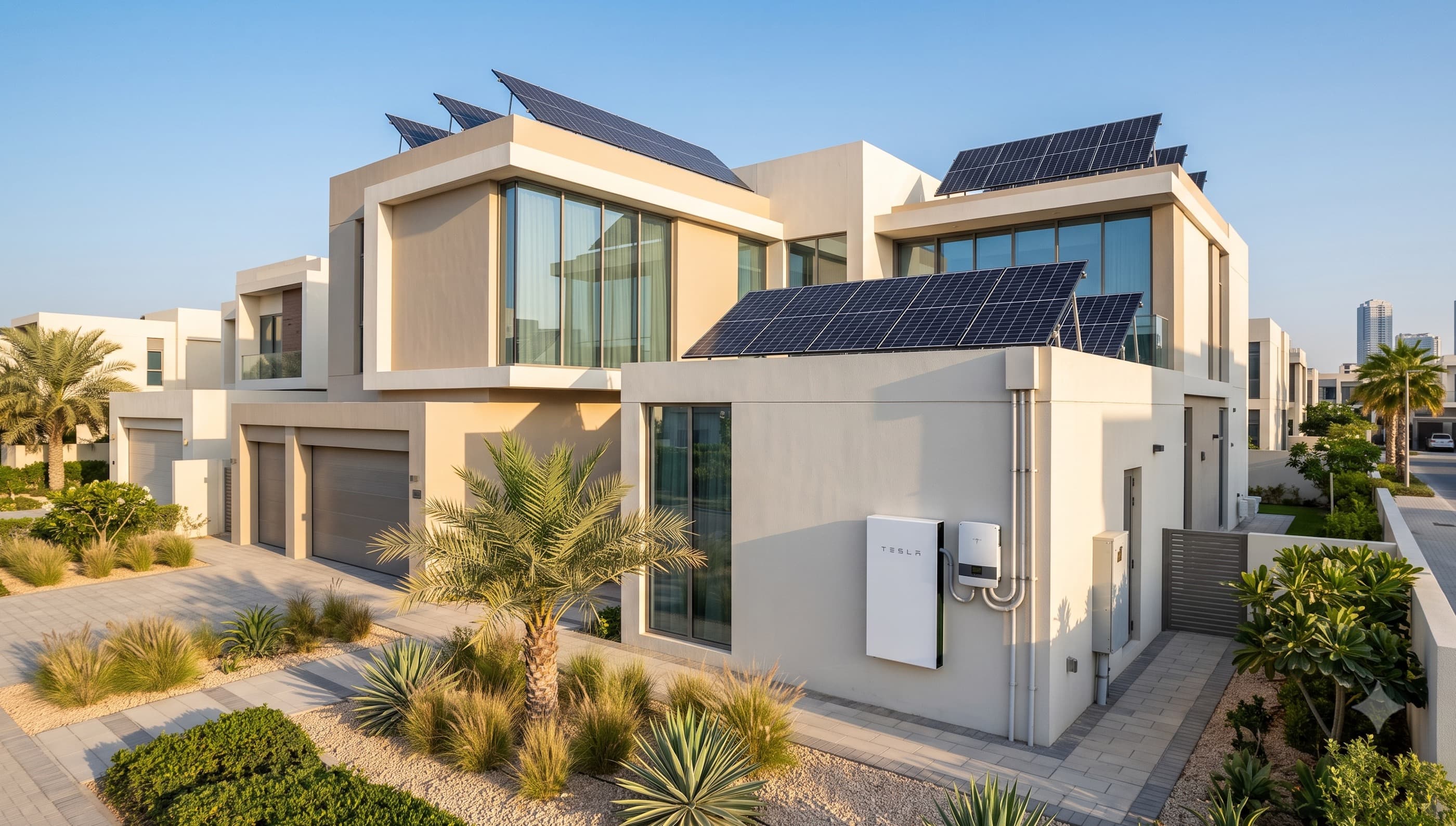
TL;DR — Abu Dhabi changed the game in 2026. The Department of Energy's Solar Energy Self-Supply Policy (Phase 1 in February, residential Phase 2 in March 2026) now lets villa owners install rooftop solar with battery storage. Crucially, it's a self-consumption model — unlike Dubai, exported surplus isn't automatically credited — so batteries and using power during daylight matter much more for your ROI. Compare Abu Dhabi installer quotes
Can homeowners install solar in Abu Dhabi? Yes — as of 2026. The Abu Dhabi Department of Energy (DoE) launched its Solar Energy Self-Supply Policy in February 2026 and expanded it to the residential sector (villa owners and eligible buildings) in March 2026. It lets you generate and store your own solar power and integrate it with the grid. But it works differently from Dubai's net metering, and that difference drives your savings.
What changed in 2026 — and why it matters
For years, Abu Dhabi residential solar was effectively stuck: there was no mechanism for private homes to benefit, and surplus exports weren't compensated. The new policy opens the door, rolling out in two phases:
Phase 1 (5 February 2026): farms, rest houses and ranches.
Phase 2 (31 March 2026): villa owners and eligible residential buildings — the first time the residential sector was formally included.
This is a genuine milestone and aligns with the Abu Dhabi Energy and Water Efficiency Strategy 2030.
The critical difference from Dubai: self-supply, not net metering
This is the part most articles get wrong, so read carefully. Abu Dhabi's policy is built around self-consumption behind your own meter. The framework explicitly does not automatically grant net metering or the right to sell electricity to the grid unless specifically authorised, and surplus power isn't automatically credited back.
The practical consequences for a homeowner:
Your savings come from using solar power as you generate it — running AC, pool pumps and appliances during daylight.
Battery storage becomes central, not optional. Storing midday surplus to use in the evening is how you capture value that Dubai homeowners get "for free" through net-metering credits.
System design shifts toward matching your daytime load and adding storage, rather than oversizing to export.
How to think about Abu Dhabi solar ROI
Because exports aren't credited, the economics hinge on your self-consumption rate — the share of solar you actually use yourself. A household that's home and cooling all day captures far more value than one that's empty until evening. Pairing solar with a battery lifts self-consumption and improves payback, but adds upfront cost.
This makes a tailored design and an honest ROI estimate more important in Abu Dhabi than anywhere else in the UAE. Generic "AED X = Y years" figures from Dubai-focused content don't transfer cleanly.
Practical steps for Abu Dhabi homeowners
Confirm eligibility for your property type under the current policy phase.
Pull your consumption data and note when you use power, not just how much.
Get designs that model self-consumption with and without a battery.
Compare quotes on installed price, battery sizing and projected daytime offset.
The bottom line
Abu Dhabi solar is now viable for villas — but treat it as a self-supply decision, not a net-metering one. The right system is sized to your daily usage pattern and may include storage. Because the policy is new and design choices vary, comparing several specialist quotes is the safest way to get an accurate picture.